The Rise of Israeli Deep Tech: Why We're Doubling Down
By Olivent Team
Israel has long been known as the "Startup Nation," but a new chapter is being written. While the country's reputation was built on cybersecurity and enterprise SaaS, today's most exciting founders are tackling problems at the frontier of science and engineering.
A Shifting Landscape
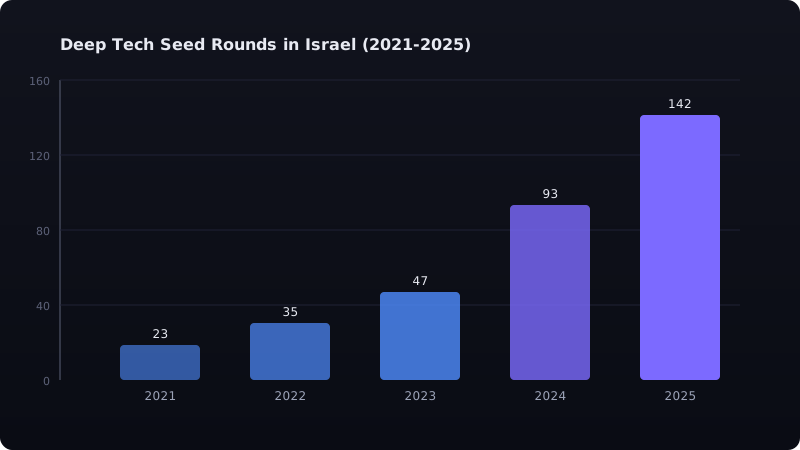
Over the past three years, we've seen a fundamental shift in the Israeli startup ecosystem. The number of deep tech companies raising seed rounds has tripled since 2023, and the quality of founding teams has never been higher.
"The convergence of world-class academic research, mandatory military service that breeds resilience, and a culture of questioning everything creates the perfect environment for deep tech innovation."
Several factors are driving this transformation:
- Academic excellence - The Technion, Weizmann Institute, and Hebrew University consistently rank among the world's top research institutions
- Military R&D pipeline - Units like 8200 and Talpiot produce engineers with experience solving problems under extreme constraints
- Ecosystem maturity - Successful founders from the first wave are now mentoring and investing in the next generation
- Government support - The Israel Innovation Authority continues to expand programs for frontier technologies
Where We See Opportunity
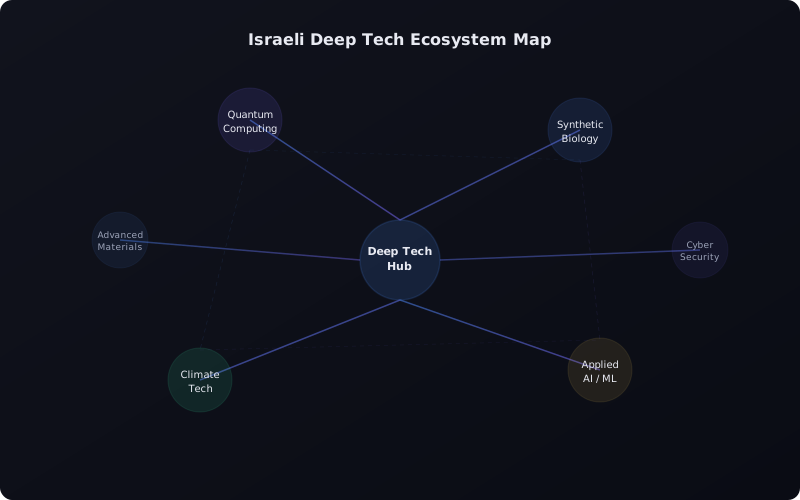
At Olivent, our thesis centers on three pillars of deep tech that we believe will define the next decade.
1. Quantum Computing Infrastructure
Israel is home to more quantum computing startups per capita than any other country. We're particularly excited about companies building the middleware layer between quantum hardware and practical applications.
2. Synthetic Biology and Computational Drug Discovery
The intersection of biology and computation is producing breakthroughs at unprecedented speed. Israeli researchers are leading in:
- Protein structure prediction and design
- Novel therapeutic modality platforms
- Agricultural biotech for climate resilience
- Computational chemistry for materials science
3. Climate and Energy Tech
With water scarcity and energy challenges in its own backyard, Israel has become a hotbed for climate innovation. From next-generation solar cells to carbon capture, the solutions being developed here have global implications.
The Numbers Tell the Story
| Metric | 2023 | 2025 | Growth |
|---|---|---|---|
| Deep tech seed rounds | 47 | 142 | 3x |
| Average seed size | $2.8M | $4.1M | 46% |
| University spinouts | 31 | 89 | 2.9x |
| Deep tech exits | 8 | 19 | 2.4x |
Our Approach
We don't just write checks. Our investment model is built around deep partnership with founders from day one. That means:
- Rolling up our sleeves on technical due diligence with domain experts
- Leveraging our LP network for early customer introductions
- Providing hands-on support with hiring, especially for hard-to-fill technical roles
- Connecting portfolio companies with global research partnerships

// Our investment framework in pseudocode
function evaluateOpportunity(startup) {
  const team = assessFounders(startup.team);
  const tech = evaluateTechDifferentiation(startup.ip);
  const market = sizeAddressableMarket(startup.sector);
  const timing = assessMarketTiming(startup.sector);

  return weightedScore({ team, tech, market, timing });
}
Looking Ahead
The next five years will be transformative for Israeli deep tech. We're seeing the convergence of talent, capital, and market need that historically produces generational companies. At Olivent, we're committed to being the partner of choice for these exceptional founders.
If you're building something at the frontier of what's possible, we'd love to hear from you.
This post reflects the views of the Olivent investment team and does not constitute investment advice.